Where the Wild Changes Us
On a hike in Denali National Park, among flowers, mushrooms, and towering trees, both living and dead, I was reminded that growth doesn’t always take the path we expect. This trail, and the man who guided it, revealed how nature and life are weaving an interconnected story, if only we are present enough to notice.
Amanda Kos
6/21/20264 min read
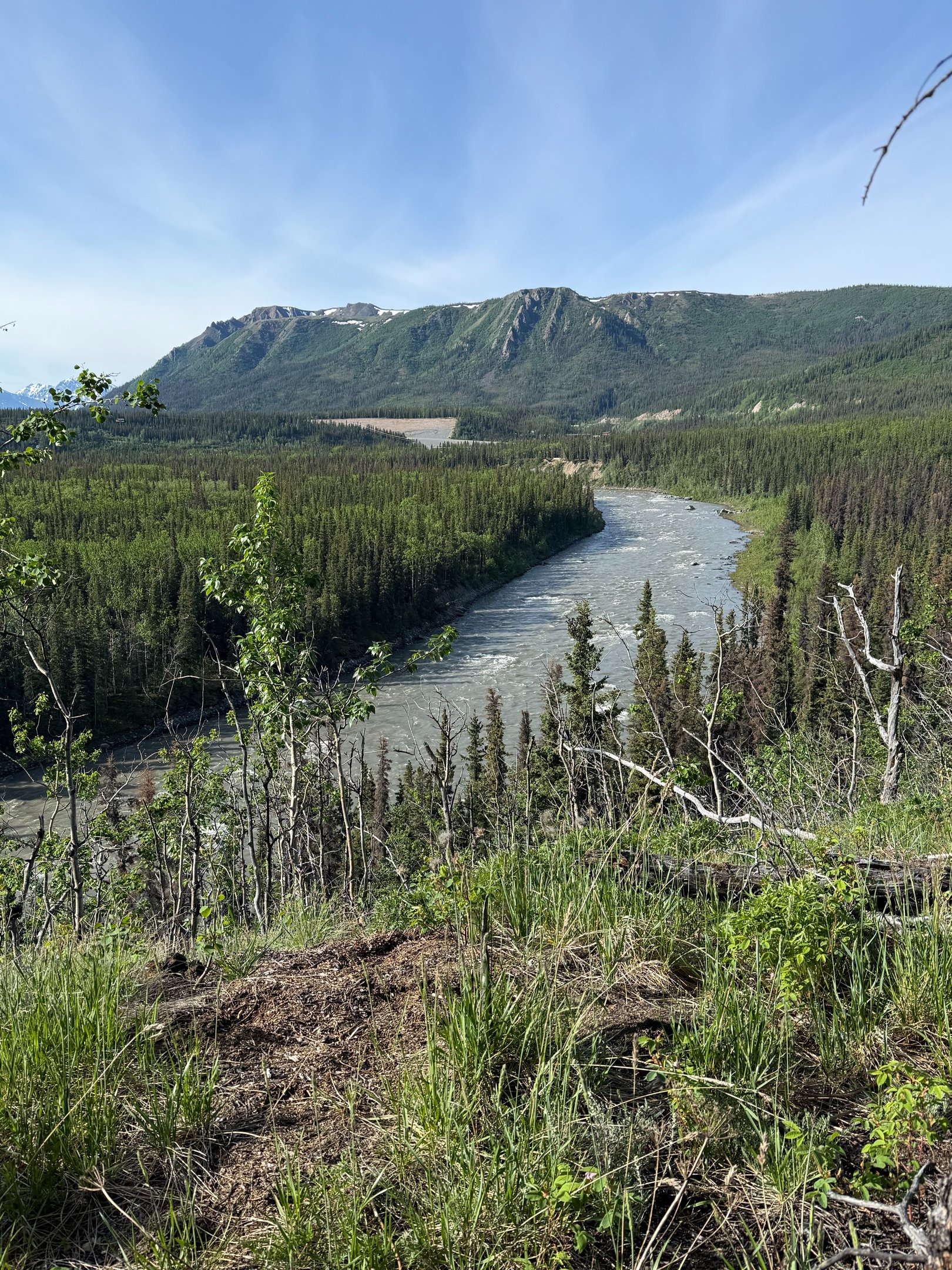
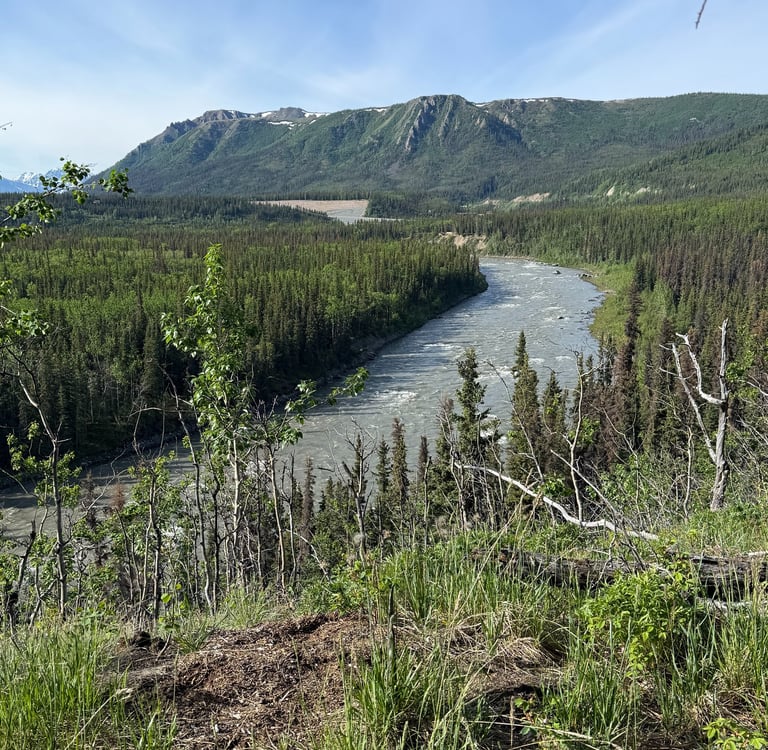
Fresh-faced, red beard, short ponytail sticking out from the back of his cap, blue eyes hidden behind dark sunglasses, Eric pulled up in a van with six other passengers ready to be our guide for this slightly more than three-hour nature hiking tour in Denali National Park.
Before we even hit the Tsenesdghass Na' trailhead turnoff down the highway, it was obvious his mind buzzed with a wealth of knowledge about the Alaskan Boreal forest. Not the kind of rehearsed knowledge you memorize for tourists, but the kind that lives deep in a person. The kind earned through curiosity, observation, and study.
After a brief but informative wildlife encounter safety briefing, we wound our way along the Nenana River Trail, high on a bluff overlooking the Nenana River, the student of the forest pointed out a wealth of fascinating facts about the living biome around us, far more than I could have absorbed in a lifetime of classroom lectures.
Raised the second of eleven children, Eric struck me as one of those souls who spent years drifting before finally finding true north. Yet after only a month and a half on this job, our small group was already bathing in the depth of this naturalist’s knowledge.
Though wildlife eluded us on this trek, the forest itself was anything but still. It was alive, rich, layered, humming.
Eric’s enthusiasm for the interdependent dance of flora and fauna was infectious. No inch of the forest escaped his eye. From moose droppings to delectable (or bitter, but edible) greens, he pointed out wildflowers in bloom and berries just beginning to form, destined to become the bears’ feast in only a few short weeks.
He showed us the effects of tiny spruce bark beetles, often blamed for destruction, but here serving their role in the larger rhythm of the forest. Dead trees stood tall and proud beside thriving healthy ones, a reminder that death and life are rarely as separate as we like to think.
Glaciers had carved the valley before us. Massive, ancient hands had shaped the land long before we ever stepped foot there. But the work of shaping the forest didn’t stop with ice. Moose, squirrels, beetles, fire, and brutal cold all continue the work.
Forces people often see as destructive.
Yet without those cycles of fire, freeze, and infestation, the forest actually suffers.
Standing there, that truth hit me hard.
Like a poet without heartache, the forest needs pain points to inspire new growth. Destruction clears the way for something stronger to rise.
And maybe humans aren’t so different.
We, too, are interconnected.
People come into our lives for a day or for a season. Some leave obvious marks; others alter us so subtly we don’t even realize it until much later. Our words, our choices, our kindness ripple outward, changing the ecosystem around us in ways we’ll never fully see.
At one point, I mentioned I hold a Bachelor’s degree in Biology. The wanderer lamented not having the official stamp of a university in some distant land. But standing there on that trail, I couldn’t help but think how little that mattered.
What knowledge I lacked, I trusted professors and textbooks to teach me.
Eric trusted the forest.
And maybe that’s the better teacher.
He had spent years as a practicing attorney, years of hard study, discipline, and proving he could accomplish difficult things. I had done my own version of that too. But despite all that accumulated knowledge, here we both stood, having chosen very different paths.
For me, it’s helping others plan adventures that might change them.
For Eric, it’s spending his days in nature, sharing his autodidactic treasure trove with awestruck tourists.
After years as a practicing attorney, he hit the breaking point where he knew he had to change course or suffer the slow, agonizing death of his soul.
Why stay in a job that crushes your soul when you can be out seeing the world?
Even better if you can make a career of it.
That was the moment he chose the Appalachian Trail and never looked back.
Now he relies on the forest for nourishment, literally in the morel mushrooms and greens he gathers, and figuratively, in the work that sustains his life in the modern world.
In our short time together as a group, we walked.
We watched.
We tasted.
We photographed.
But above all, we simply were.
We let the ecosystem invite us in for a little while. We did our best not to disturb it, but perhaps the true purpose of stepping into wild places isn’t to leave everything unchanged.
It’s to let them change us.
As we wound our way back down the very same trail we’d climbed, I couldn’t help but think life often works that way too. The path twists, circles, and sometimes leads us right back over familiar ground.
But if we stay patient…
If we pay attention…
If we stop rushing long enough to observe what’s right in front of us…
we often find ourselves exactly where we were meant to be.
That’s why I travel.
That’s why I roam.
That’s why I feed my wanderlust.
That’s why I hit the trail.
Get out there.
Take the trip.
Sign up for the hike.
Go be part of the world.
Gluten Free Will Travel
Thoughtfully and lovingly curated trips for gluten-free travelers.
Contact Me
amanda@glutenfreewilltravel.net
623-299-2246
© 2025. All rights reserved.